Month: September 2012

  • Paying credit card bills? When is the best time for that?

    When is the best time for paying credit card bills?

    If you’re anything like me, you have a credit card or two that you use mainly to amass “reward” points. One of mine gives me points to use anywhere (I normally just have the “points” translated to dollars sent back to my bank account, and the other gives me points to use on Amazon. (I LOVE Amazon, but that’s another story.)paying credit card bills
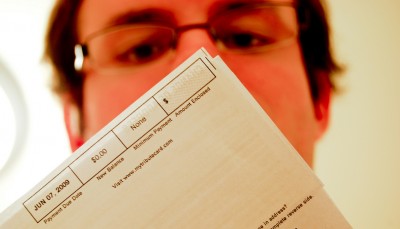
    I know there are other, fancier credit cards that give you wonderful points that can be redeemed for frequent flier miles and other exciting things, but I prefer to stay with the basics, because it’s more important to me to keep up with exactly how much I owe (and when) than it is to count on some nebulous flight I might take in the future. (That could change if I ever had a job that required travel.)

    I used to definitely be a proponent of paying credit card bills once a month, on the due date, and not one minute sooner. My mother instilled into my brain when I was a child that paying credit card bills – or, actually any bill before the due date, was a terrible idea because I would be passing up the interest I could earn from keeping that money in my bank account until the last possible moment, and what if I ever needed that money for something else, anyway?  Well, so much for the interest, as there hasn’t been any for years!  But you know how we tend to stick stubbornly to the ways we learned many years ago!

    So, for months (since I got my latest card) I struggled with the question “exactly how much money do I have and how much do I owe a few weeks in the future, anyway?)  Note to any future chess opponent: I hereby give the check, the mate, and whatever other spoils of the game are available to you without even pulling out the board, because I am the world’s worst at visualizing future moves and their effect on the overall picture – that translates to “I can’t figure out whether I am going to have enough money at the end of the month to pay this bill!”

    In addition, my newest card – the one that gives me the “best” points – has a reasonably low credit limit, since I haven’t had it long. Although I am certain the limit will be raised, the low limit becomes critical when I am waiting for the due date to pay in full, but my balance is high and I need to buy something else (I say “need” here advisedly because all these purchases are normal living expenses – I am not talking about buying jewels and furs here). Yes, I could just pay cash, but I want those points! The next thing I discovered was that on a recent credit check, I got dinged for having a card that was near its limit. Oops….and the final piece of the puzzle is that I am 100% committed to not paying the bank one red cent in interest.

    So, finally it occurred to me: give up, lady! Do it the right way, and you won’t have to worry about this at all! So, this is how I decided to handle the problem:  I keep track of my credit card charges in the best checkbook/money management program I have ever used: Moneydance.** So at the end of every week, I look at all the charges for the week, and make sure they are legitimate. Then, I do a very simple thing. I am committed to paying credit card bills by the week, and I do just that. Every week, without fail, I pay the entire bill.

    If you follow this simple method, soon you will see several benefits accrue: you will never have to worry about whether you have enough money left at the end of the month to cover all those charges, you will get lots of the rewards you wanted when you chose your card, and you will never have to pay the bank a dime in interest. In addition, unless your weekly expenses are really high, you won’t come near your limit, even if it’s a bit low, and you will show a steady, stable history of payment. And – did I mention: you won’t pay any interest! Win-win all around! Well, maybe it’s not so much a win for the bank – but I presume that’s okay with you – right?

    Now I understand that everyone might not be in a position to just “pay off the bill.” Some people have large amounts of credit card debt and if you are one of those, this post is not aimed at you – at least, not yet. There are dozens of bloggers, including me, that are willing and eager to help you figure out a way to get out from under THAT problem, and when you do – and you will, come back to this post and see about instituting this little method to stay out of that debt which you worked so hard to pay off. When that happens, let me know and I’ll celebrate with you!

       To Recap:
    1. Start off by doing whatever you have to do to get that credit card to a zero balance (I know that’s the topic of another entire series of posts, but this advice is aimed mostly a people who already have their credit cards well under control).
    2. Keep a record in your (preferably electronic) checkbook of every charge, as they are made. This is critical – don’t let the expenses get away from you!)
    3. At the end of the week, on whichever day is best for you, but at least once per week, pay the card off in full.


    **http://moneydance.com – this is not an affiliate link, but I love it that much! Moneydance works for Mac and PC (and with my data files kept in Dropbox, I can access the program from any computer that holds the program, which is all of them that I use.) I can use the Mac to interface with it today, and the PC later on today. The hardest thing I have to remember is to close the program on one computer before opening it on the other, and Moneydance even handles that gracefully – I just don’t like to have to mess with figuring out which file I want to keep.

  • Your Mortgage – Does the Mere Thought of the Word Scare You?

    It’s Here! Our very first book – and one we are so excited about, too. Written by my friend,  Y. Patrick Mazor, (and edited by me), this book will open your eyes about what you never knew about mortgages – especially the one that counts – YOUR Mortgage – You Can Save Thousands by Realizing It’s YOUR Money! The book is available on Amazon.com,  (affiliate), and we are proud to announce that this is only the first in what we hope to be a series of helpful and informative ebooks hosted by HowToHackAnything.com.  Already, there are several more ebooks in the planning!

    It has been a real treat working with Patrick to produce this ebook. Having bought several homes in my lifetime and having signed so many papers my head was swimming (such a scary feeling), it’s wonderful to know that there really IS someone out there who not only knows what all those papers are about, but can explain them in words that “real” people can understand.

    Not only can Patrick explain your mortgage in layman’s terms, he can show you how to significantly reduce the amount of money you pay for your home, and he shows you where dangers and the big savings are.  Here is a list of chapters in YOUR Mortgage.

    1. An Inherent Conflict of Interest
    2. The Loan Officer
    3. Transactions
    4. The Application, Credit Report and Upfront Fees
    5. Disclosures
    6. The Process
    7. Yield Spread Premium – Commission
    8. It’s Your Money!
    9. Another Conflict of Interest (and a Bonus)

    Whether you are about to buy a house, refinance your current mortgage, or just want to know what you really got yourself into when you sat down to “sign your life away” at your last home purchase, this is a book you can’t be without!


  • Do You Have Shiny Object Syndrome?

    Many of my friends, I have noticed, (and “maybe” I myself am just a little bit guilty of this), is that they — and I- have what my husband calls “shiny object syndrome.”

    So, what is shiny object syndrome?

    Not that anyone’s been noticing, but I haven’t updated this blog in quite a while. Well, there’s a reason for that – a new shiny object has come by. Here’s my history of internet entrepreneurship: I started a blog a couple of years ago on the topic of survival. Then, a new shiny object came by in the guise of a travel agency, and the next blog, all about travel, was born. Third, I realized I was smack in the middle of the baby boomer generation, and there are so many topics to blog about there…and then as a financial professional, I have been wanting to blog about financial topics, too, so I decided to start this blog…and finally, I also write ebooks on my favorite topics, and I have been working on another, expanded ebook about cruising, and working with a friend to help him get a book about Mortgages published – (this one is a true winner – can’t wait to get it published so I can tell you about it)! – and on and on, and you can see I’m spreading my efforts too thin. I have been working willy-nilly on so many things that none of them have been getting the attention they deserve.

    THAT, my friends is shiny object syndrome. You may have heard it laughingly referred to as “Oooohhhhhh, shiny!”

    Shiny object syndrome is a destroyer of productivity. Everything gets started (or at least thought about) but nothing gets completed or even developed properly.

    So, you may be wondering how shiny object syndrome affects you and your life. Well, if you’re lucky, or extraordinarily focused, it doesn’t. But if you’re like me, it can wreak havoc throughout your life, by keeping you from finishing what you started, or even enjoying the fruits of your labor, if you never let your work come to fruition.

    How to get over this? Well, first you really have to recognize the problem and want to get over it. If that is the case, then there are some concrete steps you can take to stop allowing shiny object syndrome to interfere with your life.

    Most of what I am going to suggest takes some list-making, so get out some paper and pencil, or use a productivity-enhancing program like Evernote.

    So, sit down and make a list of all the things you’d like to accomplish in the next, say, year. Take some time thinking about this. Feel free to adjust your timeline to a length that is more meaningful to you. I think a year is a good length of time because it isn’t so long as to lose its meaning, but it’s long enough to give you time to change your circumstances significantly as a result of your actions.

    After you have written down all the goals that occur to you (this isn’t a time to edit in advance), pick the three goals that are most important to you. Think hard before you choose a goal that depends on any of the others to be possible, because then if you fail on one, you fail on the other one as well. Independent goals are better (and don’t fret, because you can always change as you go along.) Hint: don’t allow yourself to be derailed by new technologies – they’ll still be there as you move along, but the idea here is to focus.

    Now, take each goal and write down what needs to happen before that goal can be realized. Do this for all three goals, and this is where you want to add some detail and put them in order. Number two can’t happen until number one is finished. Get as detailed as you can, because this is going to be your action plan. Once you have written down your action plan, it’s time to start doing. If these goals are independent of each other, you should be able to choose an activity from each plan to accomplish each time period (day, week, or month, depending on how far out you are planning) and get moving! The nifty thing about this is that it will give you plenty of shiny object distraction without any NEW shiny objects. All your shiny objects will be things you have already committed (to yourself) to do.

    As you move along, of course you can edit your plan, but this is the time to pledge to yourself that you are not going to allow any new goals to interfere with the ones you are committed to accomplish for the time period you have planned.

    As you move along, mark off each activity as it is finished. That is SO important, because it serves as a visual reminder to you of both what you have accomplished and what you need to do next. Before you know it, you will be so happy about what you are doing that new shiny objects will lose a little bit of their shine.

    At least until the next set of shiny objects comes along….“Oooohhhhhh, shiny!”

    Photo credit: yozza via photo pin cc