Month: July 2012

  • Peer2Peer Lending: Is it For You?

    As I mentioned on my post on loaning money to the government, interest rates these days are just horrible. I remember with regret the times that I said, jokingly, that soon, banks would charge US for keeping our money.  But I’m no longer joking, because that is exactly what they are doing. While I understand that banks have expenses to pay, I just don’t give up my money that easily! I intend to make money, and so I have gone looking for better ways to invest it than the typical savings account, Money Market or CD.

    Peer2Peer Lending
    Photo credit: 401(K) 2012

    One of the ways I have found to invest my money for better returns is Peer to Peer lending (or Peer2Peer Lending, as it is commonly known). Have you heard of it? Peer2Peer Lending is an up-and-coming new way of investing that holds great promise.  Peer2Peer Lending is a system by which willing lenders and borrowers meet in a central marketplace to lend and borrow, as it were, to the mutual advantage of each.

    Let me emphasize that this is not just a bunch of people getting together throwing money around. Peer2Peer lending is fully regulated by the SEC and by each state (more about that later), so, while like most investments that produce higher returns, there is a chance you will lose your money, and it is not insured by any government agency, Peer2Peer lending has been around a few years. The two major venues for lending have both been through “dark” periods where their processes were cleaned up, and they both emerged better for it.

    The two main venues for P2P lending in the United States are Prosper and Lending Club.  While there are many similarities between the two, the details of their operations differ.  I mostly address Lending Club, since I am more conversant with it, though Prosper is also highly regarded. In Lending Club, borrowers apply for a loan in a somewhat grueling process.  Only about 10% of the borrowers pass the first tests. The prospective loans are then rated according to a number of fairly strict criteria, including credit rating, years of employment, length of the loan, previous credit inquiries and several other important variables.  The loans are then rendered as to delete all the major identifying details, and then they are placed on the market for investors to invest in if they so choose.

    The investors fund their accounts with transferred money from their banks, and then they begin the process of choosing the loans they wish to invest in. Lenders can also choose to allow Lending Company pick loans for them, simply by specifying the risk profile they wish to fund under. Lenders then can invest any amount from $25.00 at a minimum up to the entire amount currently available in their accounts. Once a loan is fully funded, the borrower receives the cash and begins making payments to Lending Club.  Lending Club takes a 1% fee for itself and divides the payment between principal and interest, distributing this part of the payment among the lenders who have invested in that loan.

    It’s always a good idea to watch the lending and borrowing process for a while before funding any loans. Just reading and learning can substantially reduce your risk. For example: you found a great loan with a person who needs $20,000. His risk appears low to you, he only has two previous inquiries on his record, and he writes a wonderful story about how he is coming out of bad times, how he plans to do better in the future and he is going to take this money to pay off his credit cards so he can cut them up and throw them away. Whoa! There are a couple of red flags here already! Two previous recent inquiries means that he has already approached two other lenders, who have either denied him credit or didn’t give him enough of a loan to clear his debt. Also, did you know, (and I’ll admit I didn’t until I read about this) there is a strong negative correlation between 1) the length of the borrower’s description of the reason for the loan and 2) any words in that description that indicate stress or trouble concerning this debt?

    Another thing you might not know is that you really should never invest more than $25.00 in any one loan (so this means that the most successful investors own a piece of hundreds of loans). I know that $25.00 does not seem like very much money, but consider: if this borrower defaults on his loan, the most you can possibly lose is $25.00! This is why you need to spread out your risk, because you are not in this investment to lose money! You also need to know that this is not a liquid investment. Once your money has been committed to the borrower, the only way you are going to get it back (and thus be able to withdraw the cash from your account) is for the borrower to repay you.

    Interest rates range from a low of some 6% to upward of 22%, depending on the risk profile of each loan.  When was the last time you earned some 10%  or more on your investment?  Heck, when was the last time you even earned 6%?  For me, it’s been a long, long time. When you actually make an investment, before you push the “buy” button, the loan platform will tell you the historical default rate for that particular type of loan and give you an anticipated return rate that also takes into account the expected default rate. This is something you need to take heed of, because from experience I can tell you that you will eventually get a default, even if you invest carefully. Be ready for it when it comes!

    Now, about the states. There are some states, including the State of Texas, that deem themselves to be so wise that they do not allow their citizens to invest in this platform directly “for your own good.” In fact, they are so concerned with our welfare that they have made it possible for us to invest ONLY to our detriment. In other words, the only investments we can purchase on the Peer2Peer platform are loans that have already been purchased by someone else and put up for sale on the secondary market. This virtually guarantees that one of two things has happened: 1) the original investor has discovered that the loan is about to default and wants to unload it quickly, or 2) he has decided to jack the rate up for a profit, which will cause any purchaser to get a correspondingly low return.

    Thanks, States! We are so happy you are “looking out” for us!

    I would not encourage a person to invest in this platform if he or she was even close to being in financial trouble. You should take all your tax-advantaged investment opportunities first, then look to something like Peer2Peer only if you still have money left over and you want to see how you can do with this type of investment. Remember: never invest money you can’t afford to lose. Start slow. Read up!

      To Recap:
    1. Peer2Peer Lending is fully regulated by the SEC and by each state
    2. Read the loan descriptions carefully for possible red flags
    3. This is not a liquid investment – it takes time to get your cash back out
    4. Never invest more money than you can afford to lose


    Image credit: http://www.public-domain-image.com.  Thank you user 401(K) 2012!

  • Why You Should Loan Money to the Government

    I’m a contrarian – that’s something you will probably always be able to say about me, and something you are likely to notice right off the bat. First, I start out telling you it’s okay to throw away food, and now, well, let’s see what anti-conventional wisdom I am coming up with next.  But before I go any further, let me just be very clear on a few things:  No matter what you think about taxes, whether they are fair or not, or whether you think you should have to pay them, I do not ever advocate paying anything less than all the tax you owe, but I also don’t think you should pay one penny more.  Also, if you don’t like taxes, blame Congress, not the IRS.  Congress sets the taxes, and the IRS gets the blame.  While sometimes IRS methods are draconian, at least you should know that they act at the direction of Congress.

    Now, back to the topic:  In the current economic climate, there’s really no great reason NOT to loan money to your government (an interest-free loan, by the way) in the guise of a very large tax refund for yourself at the end of the year.

    Image: FreeDigitalPhotos.net 

    Yes, I know all the conventional wisdom: If your tax return is larger than about $100, you are doing yourself a very bad service, since that’s money you could have put in the bank and earned interest on! And so of course, you should always make sure your tax refund is as small as possible, and not loan money to the government, especially interst-free.

    I disagree. Why? Because, as I mentioned previously, in this current economic climate, you aren’t going to gain much advantage by keeping that extra cash in your paycheck for two reasons:

    1.  Interest rates are in the cellar (just in case you didn’t notice), and
    2.  Those “savings” will probably never make it into a savings account anyway

    But, really, don’t take my word for it. Let’s look at some interest rates to see what you actually would earn if you put an extra $1,000 in the bank and saved it for a year. Now realize that this $1,000 (which represents the amount of tax refund you could get in this example, if you are over-withholding your tax) is most likely going to be spread out over the year and divided by all your paychecks. So, if you get paid once per month, that $1,000 will be roughly $84.00 per pay period.

    I went to several bank websites to get a feel for interest rates (they are pitiful!!) and the best I could come up with in a “high-yield” bank account that isn’t restricted by location or occupation (like most credit unions are) is 0.84% at Ally Bank with no minimums and no maintenance fees. So, we are going to figure the total interest on a series of payments of $84.00 for 12 periods, compounded monthly. Using these figures, at the end of one year, your total amount saved will be $1,012.60. You will have earned an interest amount of $12.60 for the year.  Whoopie Doopie!

    And if that weren’t bad enough, you know and I know that the $84.00 is likely going to be gone before it ever hits the savings (unless you’re really smart and have it direct-deposited there, which is not a bad idea). But for many people, $84.00 isn’t really enough to make a big difference in their lives, and it would easily and quickly be absorbed into one night out at a good restaurant, a really hot summer electric bill, or one very minor auto repair. In other words, you would never even notice it.

    BUT! If you did like many people do, and deliberately overwithheld your taxes directly out of your paycheck, there is actually some advantage to be gained. <=Click to Tweet!  At the end of the tax period, usually as early as the middle to end of January, you can get your money back and it will actually be enough that you can use it for something very necessary or very special. And you would have had all year to decide what that would be!

    Remember, though: quickie tax services and refund anticipation loans are not your friend. Having owned a tax service in the past, it really bothered me to see people who needed the money so badly, paying it out in bank fees and loan application charges, simply because they just couldn’t wait any longer to get their money back (there is a reason why my ownership of this type of service is in the past, and this is one of the reasons). Most of these people also could have filed their taxes for free, if someone had just told them that the IRS allows most lower-income people to e-file for free on their website.  In addition, many of the tax return software companies allow free e-file for all taxpayers on their websites!  You just have to know where to look!  This is a topic I’ll cover more in the future.

    So save smart by having a little  extra (or a lot if you can) withheld every pay period, and have significant money to show for it at the end of the tax year!

      To Recap:
    1. If you deliberately overwithheld your taxes directly out of your paycheck, there is actually some advantage to be gained
    2. You have a whole year to decide how to use this money you saved up – that gives you plenty of time to choose the best use of your newly-saved money
    3. Don’t be taken in by tax return services that charge exorbitant fees for tax return preparation and refund anticipation loans. Keep that money for yourself!


  • When is it Ever OK to Throw Food Away?

    When we last talked, I promised you that I would tell you how and why it is ever okay to buy more than you need, and (gasp) even throw food away in certain circumstances.

    First, I’d like to emphasize that I really am not in favor of waste. I believe that we should do our best to buy what we need and use up what we buy. And of course, it’s good to plan ahead so that you will have a use for (especially) ALL the food you buy, and I encourage you to do that.

    But when you think about it, we are in a war: a war to make the best use we possibly can of our limited resources. Most of the time, unless your last name is Rockefeller or Gates, one of those scarce resources is money, and it’s my intention to help you keep as much of it as you can where it belongs: in your pocket.

    There are only two people in my household: my husband and I. We can only eat so much. We can only use so many cleaners, so many paper towels, so much laundry detergent. But we maintain a membership at Sam’s and at Costco, and I believe that even with only two people, it’s a good thing to do.

    One of the things that you hear often, when listening to people who talk about money, budgeting and finances, is that you shouldn’t buy more than you can use because it will go to waste. Well, maybe it will (though I still believe that with proper planning, you don’t have to throw food away much at all – we never do). But think about it: which would you rather waste, a little bit of food, or your money?

    I contend that you will be better off in the long run wasting a little bit of food instead of a good bit of money, if that’s the choice you have! And in many cases, it might be the best choice you have!

    Hubby and I went to Sam’s recently to buy some of our regular groceries. We put a few things in our cart that we had already planned to buy and I took the opportunity to do some comparison shopping between Sam’s and Walmart. I found some pretty interesting things!

    We tend to buy foods that I call “real” foods. They are foods that are processed as little as possible, and close to how they came from nature. For example, obviously, there is some processing involved with milk in order to make sour cream, cream cheese, and cottage cheese, but we buy them not already made into another product, like lasagna, or fettuccine Alfredo. I make my own lasagna, my own Alfredo sauce, and I make my fettuccine out of zucchini (we don’t eat wheat, so there are a lot of substitutions, but that’s another story!)

    So when we went to Sam’s, I made a point to comparison shop with foods that we normally buy. For example, I looked at:

    Sour cream
    Cream cheese
    Cottage cheese (Can you tell we like dairy products?)
    Jalapeno slices
    Pace Salsa (Oops! A manufactured food!
    Green Beans
    Catsup (Another manufactured food, but I put it for convenience only, since I make my own catsup.)
    Whole Peeled Tomatoes
    Tomato Sauce

    I discovered that when comparing between the two stores, if you plan to eat enough of the item, then you can eat that much for the same price as you would have paid for the same item at Sam’s, and any additional amount of the item you purchased at Sam’s – is free! Since it’s free, you can do any number of things with it, including adding it to recipes for the week, splitting it with friends and neighbors, or, if you really can’t think of anything else to do with it, you could throw it away, but I don’t recommend that at all.

    I realize that it all sounds a bit confusing. If you think YOU are confused, you should have seen me trying to figure out how to explain this! So, let’s take the first example: sour cream. The largest container of sour cream at Sam’s is 80 ounces and costs $5.88. The largest container I found of sour cream at Walmart was 24 ounces and cost $2.68. The Sam’s sour cream cost 0.0735 per ounce and the Walmart sour cream cost .1117 per ounce. So we can already see that it’s less expensive to buy our sour cream at Sam’s, but that’s pretty much what you expected, anyway, right?

    The big question is: will you eat enough sour cream before it goes bad to justify buying the larger container? Well, let’s see (and I hope you like dip!) The $5.88 you spend at Sam’s buys 80 ounces, as we said, but this same amount of money will only buy 53 ounces of sour cream at Walmart. So, if you choose the Sam’s container, then every bite of sour cream you eat more than 53 ounces is “free,” Even if you have to throw away up to 26 ounces of sour cream from the Sam’s container, you still came out ahead, as long as you buy it at Sam’s AND as long as you use at least 53 ounces of sour cream.  <=Click to Tweet

    The next item I chose was Pace Medium Salsa. There were several types to choose from but I will demonstrate the difference between the warehouse store price and the lowest-price per ounce option at Walmart. The largest, and of course, least cost per ounce, was the 138-ounce container at Sam’s. At $8.78, the price was only .0636 per ounce. For the offerings from Walmart, the same-brand least expensive Salsa was 64 ounces at $5.65 (.0883 per ounce). Now keep in mind that this is the same brand and variety (medium) salsa; the only difference is the size of the containers. So, if you choose at Sam’s to purchase the 138-ounce container, you would need to eat 100 ounces of the salsa in order to get the rest of the salsa for “free” (hey, that’s MORE than a quart) compared to what you would pay at Walmart. Hey, I have an idea: mix the free sour cream with the free salsa and have a party! For FREE!

    Here are a few other options I figured out for you. I won’t go through the individual calculations; it’s always the same, just like the above descriptions, but for reference, I used the least-expensive choice at Sam’s compared with the least-expensive alternative at Walmart. If you were to try these comparisons against products at other grocery stores, you would have even a larger amount of “free” product when you buy at Sam’s, as long as the items are more expensive than they are at Walmart (and most groceries are, indeed, more costly at other grocery stores).

    Item

    Sam’s Size

    Sam’s Price/Oz.

    Walmart Size

    Walmart Price/Oz.

    How much of Sam’s item to eat – and then the rest is free!

    Free Amount for this Item

    Philadelphia Cream Cheese 48 oz. .1350 8 oz. .2475 27 oz. 21 oz.
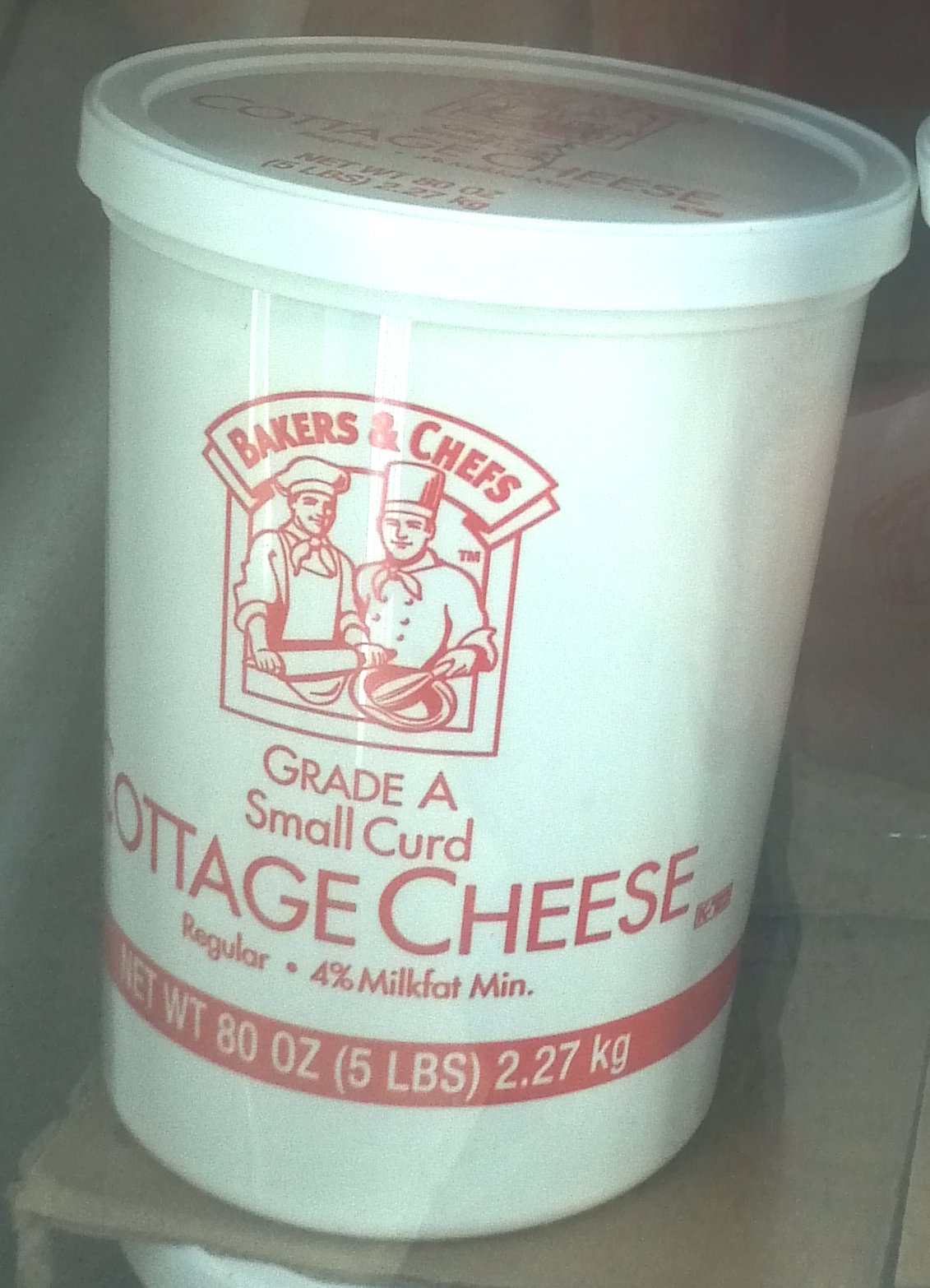
    B & C Cottage Cheese 80 oz. .0873 (Kraft Simply) 24 oz. .1100 63 oz. 16 oz.
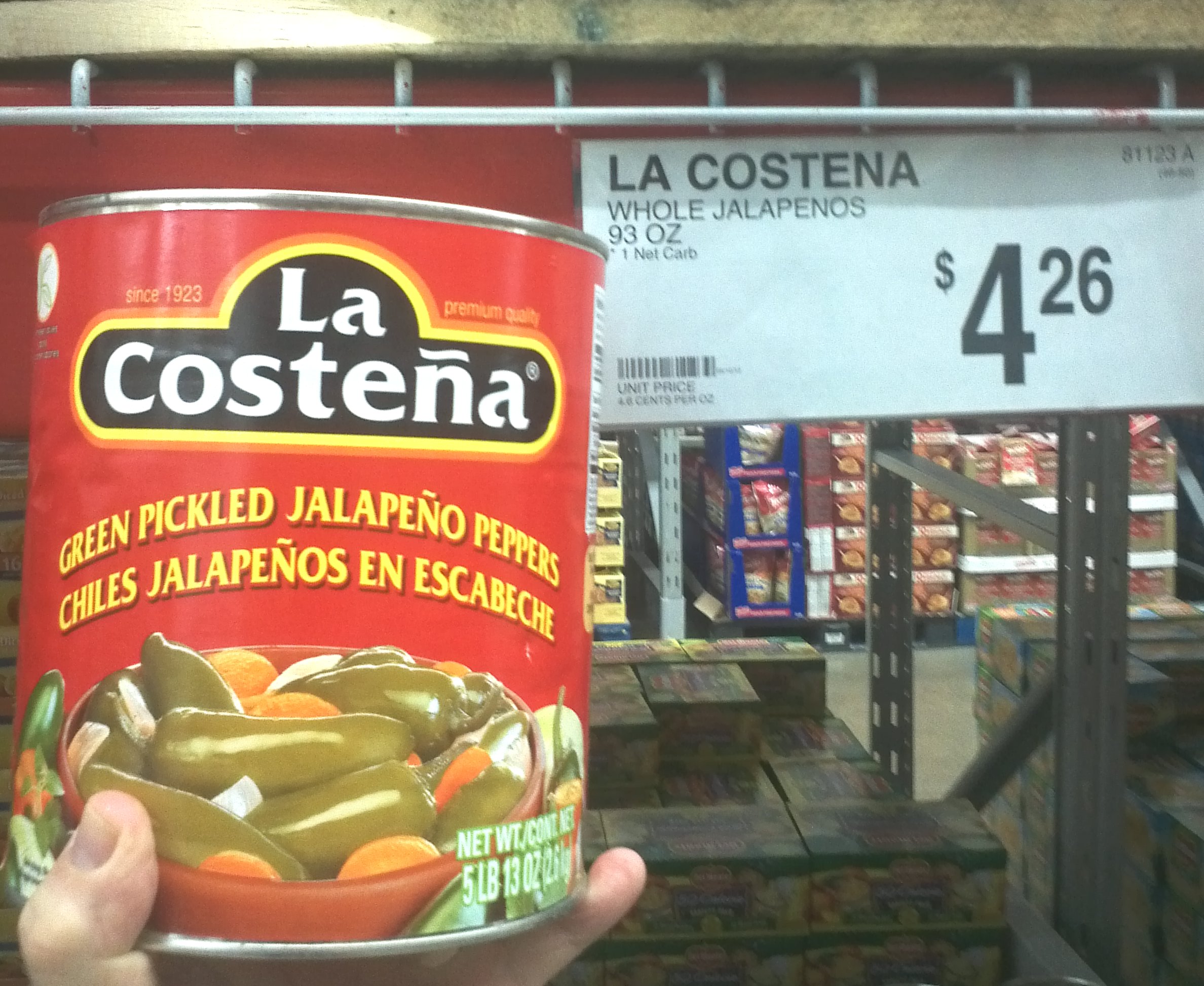
    La Costena Jalapeno Slices 93 oz.(#10 can) .0458 12 oz.(Old El Paso) .2067 21 oz. 72 oz.
    Del Monte Cut Green Beans 101 oz. (#10 can) .0315 14 oz. .0345 93 oz. 8 oz.
    Hunt’s Catsup 114 oz. (#10 can) .0288 35 oz. .0476 69 oz. 45 oz.
    B & C Tomato Sauce 102 oz. (#10 can) .0262 8 oz. (Great Value) .0413 68 oz. 34 oz.
    B & C Whole Tomatoes 102 oz. (# 10 can) .0273 14.5 oz. .0386 73 oz. 28 oz.
    Sour Cream 80 oz. .0735 24 oz. .1117 53 oz. 27 oz.
    Pace Medium Salsa 138 oz. .0636 64 oz. .0883 100 oz. 38 oz.

    If you are creative, you will soon discover that it’s not necessary (and certainly not desirable) to throw away the food you have received for free. Why don’t you do some advance menu planning and find good ways to use this extra food you got? Tomato sauce is one of my favorites: if I can’t figure out a way to use it within a short time, I just put it in a small plastic container and freeze it! Then, it’s ready any time! Catsup essentially lasts “forever,” so having extra of it is no problem, and as long as you plan to use the tomatoes in soups and stews, they can be frozen as well. I have known cream cheese to last months, unless I was making a cheesecake. Green beans might be a little more problematic, because you have to consume 93 ounces before you start pulling ahead, and if there was one item on this list that I consider least worth it, it would be the green beans. As you can see by the chart, you only get 8 ounces for free, anyway.

    I hope you will take this idea and run with it. Figure out which foods you can get “free” if you carefully check your prices, and see which ones work best for you.

      To Recap:
    1. Almost all foods are less expensive when purchased in bulk (but check to make sure)
    2. Figure up how much of the less expensive food you would have to eat to equal the cost of the more expensive food; what’s left is your “free” component
    3. Plan ahead for how to use up your “free” foods so you won’t end up throwing them away


    Enjoy your savings!

  • Welcome to Budgeting For the Rest of Us!

    I am so happy to see you here! While it doesn’t look like much has been done on this blog yet, believe me when I tell you that I’ve been busily hamstering away in the background, working on content to bring you, from a decidedly different point of view!

    Photo courtesy of digital_image_fan

    As a little teaser, my first “official” post is going to be about why, even if there is only one or two of you in your household, and even (or even especially) if money is tight, and even if you have to throw some of your purchase away, it can still be a great idea to buy more than you need!  This is not a concept I have ever heard espoused by some of my favorite financial personalities, including Clark Howard!

    It certainly sounds counter-intuitive, doesn’t it?  But rest assured that once I’m done explaining, you’ll understand the concept completely, and this is the type of budgeting and personal finance information I hope you will learn to expect here at Budgeting For the Rest of Us!

    See you as soon as I get it all together!

    (Please click on my RSS button on the right, and future posts will be auto-delivered to your reader of choice, and I’d be really appreciative if you shared using the social bookmarks I have provided below!)