Month: November 2018

  • “Pay Yourself First” to Save More Money

    “Pay Yourself First” to Save More Money

    When it comes to formulating a budget, a line-item budgeting model is what we often see, where one focuses on the expenses rather than the savings.

    This type of budgeting style details a precise amount of money for different spending categories, and just end up saving whatever amount they have left before the month ends.  Unfortunately, not everyone is lucky enough to still have remaining money at the end of each month.

    If you are one of the “unlucky ones,” I guess it’s time to reevaluate your budgeting method (and your spending habits too…) because it doesn’t sound like this one’s working for you.

    One financial game plan that you might want to consider is doing the total opposite of what you are doing right now – think “reverse budgeting.”

    Reverse budgeting focuses on savings.  Basically, you just have to figure out how much you want to save and spend the remaining amount of money for the rest of your expenses.

    So yeah, you just always have to remember to “pay yourself first.”  Simple, yet not many do this.

    To help you get started, here’s how to do the Reverse Budget Method:

    First, you need to figure out how much you may be able to save each month.

    When I say “pay yourself first,” that doesn’t mean without considering your important fixed expenses, such as rent, insurance, kid’s tuition fee, etc. Remember that the amount allocated for coffee runs, gas, groceries, eating out and other leisure purchases every month are clearly out of the picture.  These are variable expenses and the culprits of your overspending.

    So before jumping into the savings department, you need to do a little math first – subtract your fixed monthly expenses from your monthly income to get an idea of how much you can pay yourself with.

    Once you got that already figured out, it’s time to decide on how much you are really willing to give.  It’s highly recommended to pay yourself as much as you can based on the amount left over after subtracting your fixed expenses.  But make sure to make it realistic and leave a wiggle room for emergencies or other unexpected expenses.

    Next, is to set savings goals to help you decide on how much money you need to set aside for savings.

    Your goals can be as big as saving for retirement or a house, or just simply paying yourself in advance for a dream vacation or items from your wish list.

    To make sure that your savings stays untouchable, make “paying yourself first” automatic using a separate savings account.  Your options would be setting up an automatic transfer wherein your savings bank will automatically debit your checking account once your salary is deposited or just ask your HR department to split your direct deposit between checking and savings account.

    Now the money left is what you can only spend for all your monthly variable expenses.

    The best thing about this is that you will be encouraged to make wise spending decisions, become frugal (but not cheap) and find other ways to boost your income.

    Remember, budgeting take time, patience and a bit of trial and error.  What works for others may not work for you, and vice versa.  So don’t be afraid to try out different methods. Someday, you will surely find a budgeting style that is best suited for you.

    I hope this blog post helps. :)

  • Organize Your Holiday Budget with these Mobile Apps

    Organize Your Holiday Budget with these Mobile Apps

    Pixabay

    You might think that it’s a little too early to start setting up your Christmas budget but FYI, we’re only a little over a month till the 25th of December.

    Year after year, Santa’s sleigh becomes heavier and heavier, or should I say, more expensive.

    According to the National Retail Federation’s annual holiday forecast for 2018, consumers will be spending an average of $1,007.24 which is 4.1% more than last year’s $967.13.  So yeah, it just shows that Santa’s sleigh is indeed becoming heavier and heavier, or should I say, more and more expensive every year.

    So before the cost of Christmas season creeps in and put you in a pile of debt come January, here are 4 helpful apps to organize your holiday budget.

    Santa’s Bag

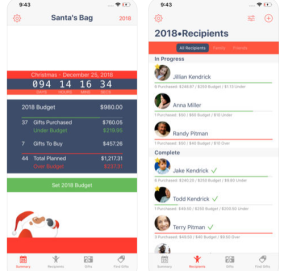
    This Apple-exclusive app is set to revolutionize your Christmas shopping experience from creating your gift list, gift planning, budgeting, managing gift receipts to gift ideas from your favorite merchants, and more.

    When it comes managing your budget, the app shows you the number of days before Christmas, how much you’ve already spent, how much you have left and the total amount that you still need to spend for the pending gifts that needs to be bought.  The app will also give you an alert that says if you are “under or over budget,” which is a very helpful feature to easily keep track of your holiday budget.

    Christmas List

    Don’t worry Android users, I also got you covered.  Just like Santa’s Bag, Christmas Gift List is a free app for creating gift lists and setting a gift budget for each person on your list.  Aside from providing a certain amount per person and per gift, it also has a feature that lets you see useful stats such as money spent so far and your total budget. And in the app, you can mark the gifts as purchased as you buy them and even mark them as wrapped as you get around to wrapping them.  As for gift ideas and shopping, it comes with an auto-generated Amazon suggestions tab that will allow you to do all your shopping within the app while keeping an eye on your expenditures.

    ShopSavvy(iOS, Android)

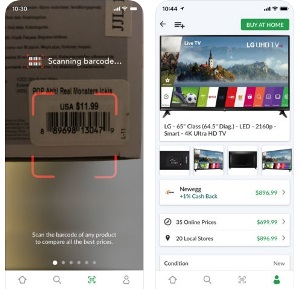
    Now when it comes to scoring the lowest price or the best deal for your holiday shopping, ShopSavvy is a brilliant app to assist you with that.  The app comes with a barcode scanner that you can use while you’re shopping to easily compare prices for ultimate savings.  You can also search through hundreds of product categories and discover deals from both online and in-store retailers, including Best Buy, Amazon, Target, Newegg and Walmart to name a few.

    Dosh (iOS, Android)

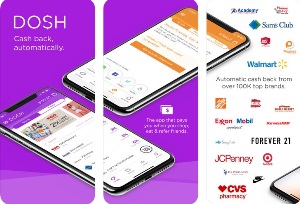
    To earn rewards from all your holiday shopping, Dosh is a cash-back app that automatically finds existing offers, redeems them and puts the cash into your Dosh Wallet.  Unlike other cash-back programs though, Dosh will give you cash and not just gift cards or coupons.  Aside from getting rewarded for physical purchases, you can also get up to 10% cash back on dining out and pumping gas at thousands of merchants and brands nationwide – perfect for your holiday travels.

    The apps listed in this blog post are really worth trying if you want to maximize savings during this very expensive time of the year.  Make sure to download all of them to avoid overspending this holiday season.

    Happy holidays!

  • 6 Free Apps to Maximize Savings on Grocery Shopping

    6 Free Apps to Maximize Savings on Grocery Shopping

    Pexels

    According to a report from the United States Department of Agriculture, the average four-person American household spends around $140 to $300 on groceries per week.

    If you are one of the families who spend more than the national average, here 6 apps that will help increase your savings on your weekly grocery shopping – from apps that offer cash back rewards and coupons, to apps that will find you the lowest prices and best deals.

    And the best part? They are all FREE! Some even offer sign-up bonuses.

    Okay, let’s get started.

    1. Krazy Coupon Lady(iOS, Android)

    First on the list is a leading national money-saving source  that has a krazy amount of coupons offered – a hand-curated database of over 4,000 free grocery coupons both printable and not, from your favorite stores like Target, Walmart, Costco, Wholefoods and more.  With its search feature, you can just type in a keyword to easily find a coupon for a specific brand or item on your grocery list.

    2. Ebates (iOS, Android)

    This company has a long-standing reputation for giving cashback on your online purchases.  You don’t get discounts or deals upfront but if you shop through their site, you get up to 25% cash back.  Signing up is free and Ebates works with 2,000 retailers including Walmart, Target, Macy’s and so much more.

    3. Coupons (iOS)

    Here, you’ll find all sorts of savings options – printable coupons, coupon codes, cash back offers and loyalty coupons.  It’s a coupon service that isn’t just about groceries and household items, but also a source for all things savings, both online and on brick and mortar stores.

    4. SavingStar (iOS, Android)

    Here’s an online platform dedicated for users to find deals and earn rewards on grocery purchases.  It has over 70,000 participating stores and has a weekly “Healthy Offer” feature where you can save on fresh produce and other healthy grocery items.  To redeem offers, just scan your loyalty card at the grocery store upon checkout (which you will be linking to your SavingStar account after registration).  For stores without loyalty cards, don’t worry because you can simply take photos of your receipts and submit them to SavingStar.  All rewards are automatically added to your account which you can cash out to your Paypal or bank account, or in exchange for gift cards.

    5. Grocery IQ

    This app will not just help you out with your budget, but will organize your grocery list too.  Here, you can build your grocery list, including product quantity, package size, etc., by simply scanning the barcode of the product or using its predictive search feature.  After that, the app will locate you to the nearest store with the best price, including deals and coupons that you can use.  And that’s not all, GroceryIQ will organize the items on your list according to the arrangement of the aisle so you can easily navigate the store and do your grocery shopping efficiently.

    6. Favado (IOS, Android)

    Lastly, this app is similar to the one mentioned above.  Favado is a grocery savings resource to help you find the lowest grocery prices and best overall deals.  It’s also integrated with Cellfire to give you instant coupons that you can use for more savings on your purchases.

    These apps are definitely worth trying if you want find ways to save on your groceries.  I hope you found these useful. :)


  • How a Money Journal Can Improve Your Finances

    How a Money Journal Can Improve Your Finances

    The practice of daily journaling has been proven to improve many aspects of a person’s life – from physical to spiritual health, quality of life and even finances.

    Keeping a “money journal” is not just a way to track your spending, but a very helpful practice to improve your relationship with money.  Because when you have a healthy and happy relationship with money, you are definitely bound to prosper.

    So how does a money journal really improve the quality of your financial life?

    It will help you reflect on your goals.

    Goal-setting is essential to achieving financial freedom.  But when it comes to money journaling, setting your goals this way isn’t simply just listing down what you want.  With your journal and your pen, you can write your big visions for the future, your small realistic goals, monthly targets, and how you plan to achieve them.  It’s a great way to reflect on every goal that you’ve set and get motivated everyday to take action.

    It will help you become more conscious with your habits.

    Journaling everyday about your finances will constantly remind you of your goals and help you become aware of your actions towards it.  With this awareness, you become more conscious and wise when it comes to spending and saving your money.  Without even forcing yourself, you become mindful of your spending.

    It can help you manage financial stress.

    Sometimes (or most of the time), our finances can give us so much negativity – fears, anxieties, worries, and jealousy to name a few, which can make us feel burned out and overwhelmed.  I think one effective way to manage these negative feelings towards money is journaling – sit down and explore these feelings instead of just ignoring them.  By doing this, you are able to reflect on how and why you are feeling this way, and identify what you can do to change this.

    It will inspire you to be grateful.

    One journal writing idea is listing down the things that you are grateful for.  Make it a habit to write at least three things that you are thankful for everyday, no matter how bad your financial situation is.  Remember that abundance in gratitude equals abundance in life.  And I truly believe with the saying that, “a grateful heart is a magnet for miracles.”

    It can help you manifest wealth.

    Some of you may disagree with me, but I believe in the law of attraction.  I know that if you ask, you will receive.  With your journal, you can manifest all your financial desires, no matter how impossible it sounds during that time.  Be specific with your manifestations and really feel that eventually, it’s going to happen.  With your faith, our Creator will surely give it to you at the right time.

    It will help you see your progress.

    With all your goals written down, you can see how far you have become, celebrate your success and get motivated to work on the rest of the goals that are yet to be accomplished.