Blog

  • Renting vs Buying a Home: The Good & The Bad

    Renting vs Buying a Home: The Good & The Bad

    Pexels

    To rent or buy a home, that is the question.

    To own a home is a life goal for most Americans.  However, not everyone is financially equipped to do so.

    Home ownership isn’t always the best decision, nor is renting better than owning.  Both  have their own pros and cons, so let’s discuss them one by one. (more…)

  • Setting Up a Budget for Your Next Vacation

    Setting Up a Budget for Your Next Vacation

    Pexels

    Spring is here and for most of you, it’s that time of the year when you begin planning for your upcoming spring break and summer getaways!  But planning isn’t just about choosing where to go.  The most important part of it is setting up a budget to make sure that you will be able to afford the trip and avoid going broke after.

    To guide you, here are the things that you need to consider when creating a budget for your vacation. (more…)

  • You Need a Plan

    You Need a Plan

    coins-balance
    Image credit: Pixabay

    Even you’re scraping by on a minimum-wage job, you need a budget.

    The basic plan is pretty straightforward:

    1. Total your income from all sources
    2. Estimate you total expenses
    3. Calculate the difference

    If the difference is negative, you need to figure out how to fix that! You can either increase your income, or decrease the outgo, or both. The easiest way is usually to decrease your outgo.

    If you have been caught up in the credit card trap, the first step is to cut all of them up. Contact the credit card issuers, and let them know that you are in trouble, and you will not be be charging anything for a while, and tell them that you need for them to cut off your credit supply. You may be able to arrange some relief from your credit card company — especially if the alternative is your bankruptcy, in which case, they don’t get anything. Then, if you can’t afford to pay cash, don’t buy it.

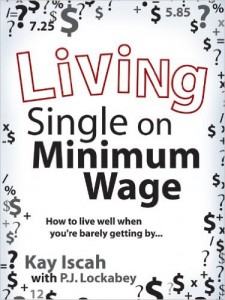
    LivingMinimumWageIf you smoke – stop. That can save you over $100/week! That’s one of the most expensive gratuitous habits you can have. Except maybe for illegal drugs.

    Groceries? One thing I learned in my early years was that preparing my lunch and taking it to work every day was equivalent to a $200/month tax-free raise. That was a long time ago, so it’s closer to $500/month now. When you go to the grocery store, use a list, and stick with it. And remember: If it comes in a box or a bag, it’s probably overpriced.

    If you don’t know how to cook, learn! It’s not hard, and the only things you really need are a pot, a good knife, a big spoon, and a source of heat. More equipment is nice, but I know from my own personal experience that you can prepare adequately nutritious meals with only those utensils. And you can get all of those at a thrift store for not much more than the price of a Big Mac.

    Clothes? Back when I was in college, and was working in the cafeteria to get by, I found that I could still dress OK even for special occasions by buying all of my clothing (except underwear) in thrift stores. I once bought a really nice double-breasted suit for $7.50. Even in the mid-seventies, that was a pretty good deal. I was wearing that suit when I met the girl I later married.

    Transportation? If you live in an area with bus service, you will find that is the cheapest way to get around. Well, maybe walking is cheaper. And you can probably find a serviceable bicycle for less than the cost of a tank of gas.

    Housing? That can be a problem, but you can reduce expenses by getting a roommate. If the price of housing is just way too much, consider moving to an area with cheaper housing.

    I’ve been through times where I had to make the decision of whether to eat or pay the rent and buy transportation to get to work for a week while waiting on my first paycheck. As it turned out, fasting for a week didn’t do me any harm.

    Most of the readers of this are not in such dire circumstances, so trimming expenses will not be as difficult. But I have personally lived through all of the above (I didn’t smoke or do dope, which made things much easier!), so I know it can be done.

  • Do You Have a Privileged Relationship?  Not With Your CPA!

    Do You Have a Privileged Relationship? Not With Your CPA!

    So, have you heard any juicy stories lately? Have you told any? You know, like that income you forgot to report on your tax return, or fake deductions you took on your business?  Do you think you have a privileged relationship with your CPA?

    Whatever you do, don’t tell me! I don’t want to hear it! Yes, even though I am a CPA and am fully qualified to help you with your tax problems, please do not tell me your guilty tax secrets, especially if they involve criminal intent (aka you knew what you were doing was against tax law when you did it, and you did it anyway). Why? Because you and I do not have a privileged relationship, and if the IRS comes and asks me about anything – ANYTHING you told me – I am bound by law to tell them. You and I (or you and **any** CPA) do not have a privileged relationship, even if you hire one of us to help you catch up on back taxes, and I am bound to let you know that in advance.**

    You’ve heard that familiar wording: anything you say can and will be held against you in a court of law? That’s the common Miranda warning, and I certainly don’t have any authority to arrest you (nor desire to do so), but the fact is that you should not tell your CPA anything you don’t want reported to the authorities.

    So, who can help you if you have done something wrong, and you need to get your tax situation straightened out?

    A Tax Attorney, that’s who! There is a concept called “attorney client privilege” which will protect the confidentiality of any discussions, admissions, or anything else you tell to a tax attorney, as long as you do so according to the “rules,” which the attorney can explain to you in a way that you understand. He can legally refuse to answer questions asked by any governmental authority, including the IRS, state taxing authorities, and any court of law. Not only can he do so, he is legally bound by his oath and licensing to do so, as your advocate.

    Tax Attorneys are also better versed on the newer and more technical laws behind taxation (and many are also CPAs as well). Yes, as a CPA, I know the general rules and have the knowledge to help you file a good tax return, but when it gets down to the details of arcane and unusual tax situations, I can’t help you with those. Sometimes even a tax attorney can’t actually resolve the problem, and the situation has to be straightened out in court, and a tax attorney is qualified to do that. Interestingly, a CPA and an EA (Enrolled Agent) are also permitted to appear before the bench in tax court, but if it’s confidentiality you need, the tax lawyer is your guy.

    If the worst happens and you end up in court, or if the IRS starts making demands, your tax attorney also has the ability and training to negotiate on your behalf. And while CPAs take training every year to maintain their license, the training that tax attorneys take centers more on the finer points of the newer laws.

    It’s a good idea to pre-interview your accountant to make sure they are able to do what you need for them to handle. If the scope of the work you need done falls within the category of confidentiality mentioned above, you should go to a tax attorney. If you have a good relationship with your CPA he or she may be able to refer you to a good attorney. Otherwise, ask for references from other attorneys, the state licensing board, other CPA’s and other business owners. Just like you would in any business situation, be sure to ask about fees and expenses before you make any agreements with the attorney. And honestly, find one you like. If you discover you don’t like the tax attorney you are working with, you will never be satisfied with his or her work.

    So, if you ever find yourself needing help with a serious tax problem, before you spill the beans to anyone, including your CPA, head for the tax attorney’s office first and get some confidential assistance.

    Always remember: it’s your name that gets signed on the bottom line of the tax return, and it’s your responsibility to pay all of your taxes, so be sure you understand what your CPA, EA, or tax attorney is doing with your tax return.. If for any reason you feel like you are getting the run-around, request all of your records back -they are required by law to give them to you – and go to another tax professional).

       To Recap:
    1. Your relationship with a CPA is not legally protected
    2. Tax attorneys can provide legally protected confidentiality
    3. When choosing a CPA, an EA, or an attorney, be sure to choose one you like and feel comfortable with.

    **I use the term “You and I” loosely here for an example, as I am not currently in the public practice of accounting. Although I am a licensed CPA, the “public practice of accounting” requires certain permissions that I have held in the past, may hold in the future, but do not currently hold.

    photo credit: omiee via photo pin cc

  • Want to Cruise? Avoid These Money Traps!

    Want to Cruise? Avoid These Money Traps!

    YourFirstCruiseCruising can be one of the most economical modes of vacationing, considering what you get for your cruise fee, namely, a floating luxury hotel that travels to several ports. All of the meals are included (well, sort of… see below), and you only have to unpack and re-pack once. Many of the amenities are no extra charge.

    Cruising has been one of the favorite activities that my wife and I have done for the last several years. My wife likes it even more than I do — she wrote the book that you see pictured in the upper left of this article. Oh, yes, that’s me in the green shirt.

    However, there are still a lot of money-sucking traps waiting for cruisers. Some of them are blatant rip-offs, but there are a few that you just need to plan for to minimize the impact on what should be a stress-free week (or longer) of shipboard relaxation.

    Double-Occupancy

    For starters, be aware that all cruise prices are quoted as “per person” but almost always assume double occupancy. So when you see a $800 cruise, just mentally double that, because you will probably pay $1600 for that cruise, even if you are traveling by yourself.

    There are a few cruise lines that are beginning to cater to single travelers with smaller cabins set up for just one occupant, but those are the exception. Sometimes, the cruise line will connect you up with another cruiser to share a cabin, but rooming with a total stranger for the duration of the cruise might not be something you want to do.

    Snack, Sodas, and Juices

    Things like ice cream and sodas (outside of meal times) also generally cost extra. There are a couple of ways to reduce the cost of these items. The way I do that is simply not eating outside of the dining room at mealtime, but one of the attractions of cruising for most folks seems to be non-stop eating.

    Some cruise lines offer beverage packages that include generous (sometimes even unlimited) quantities of soda and premium juices. The price on the beverage packages may seem high, but if you are going to drink lots of carbonated beverages or fruit juice, they will save you some money.

    Alcoholic Beverages

    While many of the amenities are no extra charge, there are some that cost a lot extra. If you are fond of alcoholic beverages, you can easily rack up a drink bill that exceeds the cruise fee. And the cruise line will not allow you to bring your own, since that’s a major source of income for them. Occasionally, there will be activities that feature free drinks, but those are a bit rare. Personally, I generally choose not to drink on board. Even the drinks in the tourist traps are cheaper.

    There are sometimes beverage packages that include alcoholic drinks. I’ve never tried any of them, since I wouldn’t drink enough to make them worthwhile to me.

    Premium Dining

    A trend that I find a bit disturbing is the “premium dining” venues. So far, I have not tried any of them to see if they are worth the extra $20-$50 per person, but I have recently noticed that there are some extra-cost items on the menu in the regular dining rooms. I suspect that the cruise lines are trying to move to more extra-cost dining, and I think that they would probably like to get rid of the “free” dining business model completely.

    Probably the only reason they have not already done so is that a large percentage of cruisers (including me) would start opting for other types of vacations.

    Souvenirs

    The trinkets and souvenirs available on a cruise are grossly overpriced. In fact, just about any item in a shipboard shop is going to cost you about 3-4 times the cost of that same item almost anywhere else. There are a few exceptions, but not many. Plus if you look carefully, you will see that most of the souvenirs, even in the tourist traps in the various ports, are made in China.

    What I have typically done for souvenirs is to wander beyond the tourist trap, and just get a couple of dollars’ worth of the local currency, usually in coins. Ok, I have to admit that I’m guilty of buying a few overpriced T-shirts and hats, too, but I budget for those items before I go.

    Excursions

    I generally don’t go on many excursions, but I have enjoyed a few. Be aware that the excursions that you can book on board will cost more than those you can arrange for yourself. However, even though they are more expensive, I recommend that you get the cruise-sponsored excursions, for one very important reason: If a cruise-sponsored excursion is delayed getting back for any reason, the cruise line is responsible for getting you back on the ship. Otherwise, you are on your own. Believe me, you don’t want to get left behind.

    Sponsored Tourist-Trap Shopping

    One money-trap I have avoided completely is the “recommended shopping” venues. Most cruise lines will have on-board sessions (“lectures”) on things to buy in the next port of call. I have never found any of those to be worthwhile. You just aren’t going to find any of those specialty items cheaper in a port of call than you can get either at local shops at home, or on the Internet. Oh, and speaking of Internet…

    Slow and Unreliable Shipboard Internet

    If you can possibly get completely away from accessing the Internet while you are cruising, do that! A week of shipboard Internet will cost you more than 3 months of your home broadband service, and the performance will be much slower. Painfully slower! Unfortunately, Internet is something that my wife and I don’t want to do without for a whole week, so what we do is get one “unlimited” account and share it.

    Here’s a big hint: Do your websurfing or email access very early in the morning, while most of the other cruisers are still asleep. I have found that I can get more Internet stuff done between about 5 a.m. and 7 a.m. than I can in the other 22 hours of the day combined. Occasionally, you can find an Internet cafe in a port, where you will find reliable broadband for about 5% or less of the cost aboard ship. However, you might not really want to spend your port time that way, and the Internet cafes are never in the tourist-trap areas, so you will have to do some traveling beyond those areas.

    Shipboard Casinos

    I consider it a great blessing that gambling never had much appeal to me. I try to avoid the shipboard casinos completely because they always stink like ashtrays. But even if the second-hand smoke doesn’t bother you, note that the payouts on the shipboard casinos are lower than you will find just about anywhere else in the world. A lot lower.

    Paparazzi

    Another item I would like to mention is the shipboard photographers. I have noticed that starting about two years ago, the “official” photographers suddenly got a lot less pushy. I suspect that there were some high-profile complaints about that. Needless to say, the photos available aboard your cruise are grossly overpriced, and you can probably get photos you would like better using your cellphone. I have even gotten our dinner waiters to take photos of my wife and me with my cellphone.

    Speaking of cellphones…

    International Cellphone Roaming

    Unless you are willing to go through the hassle of getting an international SIM, just put your cellphone on “airplane” mode for the whole trip. Otherwise, you can come back to a really nasty surprise in your cellphone bill for international roaming.

    I just accept the fact that I’m not going to be making or receiving any phone calls at all while I’m cruising, and I actually like it that way.

    Tipping

    One last item: Tipping. Always tip generously. Especially if one of the service staff goes out of his/her way to help you or fill a special request. Most of the crew that work their tails off to make your cruise enjoyable and trouble-free are not paid very well. Set aside a couple hundred dollars to use for tips at the end of the cruise. Just do it. While it’s an extra expense, I don’t consider this to be a money “trap.”


  • How to Save Money & Frustration While Traveling

    How to Save Money & Frustration While Traveling

    2
    ShutterStock image licensed by the author

    Traveling to a holiday destination or on a business trip can be a delightful and exciting experience.

    However, every trip starts with planning chores and precautions many are loath to do. Without proper planning, holidays easily degenerate into expensive nightmares. This doesn’t have to be so, if you:

    Do your homework

    This is the most important part of a trip. Most people prefer exotic locations for their holidays, which inadvertently mean they have no clue about the place. It is therefore makes sense to do as much research as possible. Check with friends and family who have visited that location for tips and advice. You can also check online sites where visitors post their experiences and recommendations.

    These are some of the things you need to consider about your destination beforehand.

    The weather/climate

    This will determine what you need in terms of clothing, transportation etc. This will save you unexpected shopping costs when you get there. For example, if you are going someplace where temperature variations are larger than you are accustomed to, plan to dress in layers.

    Culture

    This is important and may dictate what food or drinks are available. You may have to make other plans if you have special dietary requirements.

    Average costs

    Holiday destinations especially those far from cities can charge high prices for simple necessitates like sunglasses. And really ridiculous prices for such “luxuries” as a bottle of water or an umbrella.

    Distances between attractions

    Your glossy travel brochure may fail to mention that those historic sites are only accessible by taxi, or twice a week. This will result in costly travel expenses or cancellations. Call ahead to avoid costly hassles.

    Hours of operation

    Many visitors get stranded when travel schedules, especially those involving public transportation, go wrong. Do not make very tight schedules, to avoid missing a connecting flight, or the last shuttle to the secluded resort.

    Book in advance

    3
    Image licensed by author

    A spur of the moment adventurous trip may sound like a romantic idea (and can even be a bargain), but be prepared for late booking fees, reservation wait lists, unconfirmed bookings, and sky high rates for “impulse” excursions. Usually, you will save a lot of money by booking well in advance. This applies to hotels, airlines, concert tickets or boat cruises. Early booking gives you choice discounts, package specials and free offers. This also avails enough time for you to research and plan every little detail of your trip.

    Travel off-season

    Those ancient sites or pristine sandy beaches can be crowded and expensive in high season. Most businesses have to cash in during the brief holiday weeks, and will therefore charge a premium. This includes everything from airlines to the local ice cream vendor. You can save significant amounts in hotel, transport, tours, and food charges by traveling off-season.

    How you pay matters

    Cross border payments are a veritable gold mine for banks, credit card companies and other payment processors. Your holiday can be much more expensive when you get hit by extortionist exchange rates, check clearing fees, money transfer charges, overdraw penalties and roaming surcharges. Credit cards are the best for making payments abroad, but be sure to use those that support multiple currencies and charge low fees. Avoid using your bank account at all costs. Paying in cash may also attract penalties in certain places, such as for train or bus tickets.

    Cell phone roaming

    If you are not leaving you own country, this may not be a concern. But if you are traveling to another country, you may come back to find your cell phone bill with several hundred dollars in “roaming fees” even if you didn’t make or get any calls! This is because the “smartphone” nearly everyone carries these days may automatically pick up email from any carrier it finds — which comes with hefty data charges. To avoid this, contact your cell phone provider to see what fees you may encounter at your destination. If you are planning early enough, you may be able to get a foreign SIM. You might have to “unlock” your phone first, but most carriers will let you do that if you tell them you will be traveling to another country.

    It may be less expensive to rent a cell phone while you are there.

    Online resources

    The modern traveler has a host of resources online which can make traveling much easier to plan. Services such as Turkey Visas have also gone online, making most travel requirements accessible at a click of a button.

    Use all these resources to ensure your trip turns out to be a memorable one — in a good way.

  • How to Get the Best Deal on College Education

    Photo Credit: Werner Kunz via Compfight cc
    Photo Credit: Werner Kunz via Compfight cc

    Do you know of any jobs that require you to have a college degree for them to even consider you? Ummm, yup, pretty much all of them. College is incredibly important these days. If you want to get ahead (or at the very least keep up with everyone else), it is almost a certainty that you should not only attend college, but that you should receive a Bachelor’s degree as well.

    Many people understand that college is important, but the next question is, “How can I possibly afford it?” Tuition costs are skyrocketing and the job market is seemingly paying less and less. You need to figure out how to get your degree for a deal and I’m going to teach you how to do it.

    Scholarships

    One of the best ways to reduce your college costs is to get a scholarship. If you are a minority, then you have a better chance than anyone to get awarded a scholarship. Check with the major scholarship sites, but also check the scholarships that are tied to particular institutions.

    If you are not a minority or if you’re just having trouble finding scholarships that pertain to you, then your best be might be study up and take that ACT (or SAT, depending on where you live) again. If you can score high on these tests, then scholarships will simply start to fall into your lap.

    Head to a Community College

    If there is a community college that’s nearby, you can save a ton of money by continuing to live at home and earning your associates degree there. The costs per semester are often thousands of dollars less and when you subtract what you would have paid for room and board, you are coming out way ahead.

    Finish Out Your Degree at the Local State College

    Private institutions are simply too expensive these days. And, if your degree is in something other than engineering, business, or medical, then the expense probably just isn’t worth it. Instead of shelling out $40,000+ per year, cut those costs down to $20,000 or less by attending your Division II state college. You will receive a fantastic education still, but it will not break the bank.

    Find a Job at the Institution

    There are many colleges that have work study programs that allow you to earn some money working on campus. This might be in the form of secretarial duties, maintenance, or an RA (resident assistant). Whatever the case may be, if you are able to earn money without leaving campus, life is pretty sweet. This way, you don’t really need a car, you’re not wasting time driving to and from work, and you’re earning some pretty easy money!

    Do Your Homework

    In the end, it all comes down to “doing your homework” sort of speak. There are many colleges to choose from these days. Be sure to do your due diligence and choose the most cost effective school with the best reputation for your desired field. Once you decide which school is best for you, then you can decide how to get the best deal on your education.

  • Shaving on the Cheap

    Shaving on the Cheap

    I keep running across various ways to save “lots” of money on the ritual of shaving. That sort of post seems to have a very broad appeal, since almost everybody shaves. Most women shave their legs, and most men shave their faces. I wear a beard, but I still shave in order to keep the appearance neat.

    A few months ago, I saw a blog post on Thousandaire about reducing the cost of shaving your face to a couple of bucks/month. It was mostly about an outfit called The Dollar Shave club. I wasn’t terribly impressed, since I already spend a lot less than a dollar a month on razors. I’ve also found that razors tend to dull more from corrosion than from cutting whiskers, so I carefully dry my blades after each use, and the el cheapo blades I get in bulk at the discount stores (15 or so for about $10 — but NOT this brand!) usually last me about a month each before I notice any discomfort.

    This morning, in Gary North’s newsletter, he talked about a couple of ways to extend the life of a shaving blade to 3 months or longer. (I don’t have a paid membership, but his free newsletter is usually work reading.)

    Here is one way from a video on YouTube, in which the video creator says that he gets at least 6 months of use out of his razors:

    Dr. North considers that the “time consuming way”. He took that a bit farther by putting up a strip of blue jean material on his towel bar and using that as a strop. He reports getting 3 months use from one blade.

    But he also tells about another method he has tried (the “non-time-consuming way”), which extends the life of the blade by several more months. He has a glass of cheap olive oil in which he leaves his razor to soak between shaves. Since the real enemy of the sharp edge is corrosion, this is probably one of the better ways to keep your blade sharp. I suspect almost any oil would work (although most vegetable oils will go rancid in a few weeks). I may try an ounce of synthetic motor oil (since I happen to have a partial bottle of the stuff in the garage) to see if that works.

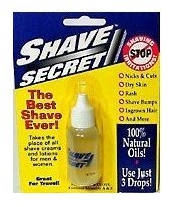
    I think that one of the reasons that my blades last as long as they do is because I don’t use shaving cream. Instead, I use Shave Secret, which is a blend of oils.  So, when I rinse the blade in hot water, tap all the oily whisker residue out, and wipe it dry, there is probably a very thin film of oil left. Shave Secret comes in a tiny plastic bottle, which lasts me about 6-8 months, since you only need 2 or 3 drops per shave.

    Mrs. BFTROU does me one better. She just uses coconut oil, which also works quite well.

  • New Theme

    New Theme

    When Mrs. BFTROU set up this blog, she chose the Atahualpa theme, mainly to experiment with it. One of our friends uses Atahualpa, so we figured it would be a good theme to use.

    Today, I got rid of it, and replaced it with a much simpler but less customizeable theme. Not so much because I didn’t like the theme, but because I just didn’t have the time or inclination to deal with the literally thousands of different customizations available with that theme. Plus the last batch of customizations made the site difficult to read.

    Atahualpa is probably GREAT for somebody who either has only one blog, or wants to use only Atahualpa on all his/her blogs. Otherwise, the sheer complexity of the theme will drive you nuts.

    For me, a less complex theme gives me most of what I want. I hope that the result is easier to read and navigate. Bear in mind that this is probably not the last time I will update the theme…

    If you have any suggestions for improvement in any aspect of this site, please feel free to comment below — or use the contact form if you don’t want to excoriate me publicly.

  • A Credit Report That is Really Free!

    A Credit Report That is Really Free!

    Usually, when you get a “free” credit report, you have to enter a credit card. Then, if you forget to cancel your “service” you get billed after the “free” month.

    However, there is a credit reporting service that doesn’t do that. It is really free. They are hoping that you like the service enough to continue to use it – and they appear to have lots of happy “customers.”

    One minor glitch, however — it isn’t really your “offical” FICO score. They arrive at their figure a different way, and it’s an estimate. However, it’s pretty close, and their score will tell you things like whether your real FICO score is going to be in the ballpark for qualifying for a decent rate on a mortgage. And unlike a real credit check, it won’t affect your credit rating at all (they do what is called a “soft inquiry”).

    As an added bonus (it’s all free, mind you), you can use their “what if” simulator to see how much impact certain transactions might have on your real FICO score.

    The downside? Well, they get your email address, and you get on an email list (surely you anticipate this sort of thing these days!). Then, when you use their site, you get shown ads. But one really neat thing about that is that the default response is always “no.” Of course, you can use a “throwaway” email address to sign up, but I think the site is useful enough to tolerate the ads.

    I even checked the box inviting them to send “special offers.” After all, one of the things I’m trying to learn is how to sell stuff on the Internet, and I get to study all of their best copywriting — also for free. Oh, and my credit score was excellent, as expected. Mrs. Bfthrou does a great job of keeping us on the “straight and narrow.”

    The site is called Credit Karma. Try it out!