Blog
-
How to Set up your Budget for 2023
 Setting up a budget for the year 2023 can be a helpful way to manage your finances and achieve your financial goals. Here are some steps to help you get started:
- Determine your income: The first step in creating a budget is to determine your monthly income. This can include your salary, any bonuses or commissions, and any other sources of income. Make sure to include any irregular income, such as freelance work or rental income, as well. (More on this in a later blog post.)
- Identify your expenses: Next, make a list of all of your regular monthly expenses, such as rent or mortgage payments, utilities, groceries, and debt payments. Don’t forget to include any irregular expenses, such as annual insurance premiums or holiday gifts.
- Determine your financial goals: What are your financial goals for 2023? Do you want to pay off debt, save for a down payment on a house, or build an emergency fund? Having specific goals in mind can help you make budgeting decisions that align with your priorities.
- Create a budget: Once you have a list of your income and expenses, you can start to create a budget. Start by subtracting your expenses from your income. If the resulting number is positive, you have some money left over to put towards your financial goals. If it’s negative, you’ll need to find ways to reduce your expenses or increase your income.
- Track your spending: It’s important to track your spending to make sure you’re sticking to your budget. You can use a budgeting app or spreadsheet to keep track of your expenses. This will also help you identify areas where you may be overspending and make adjustments as needed.
- Review and adjust your budget regularly: As your circumstances change throughout the year, you may need to make adjustments to your budget. Review it regularly, at least once a month, to make sure it’s still accurate and aligned with your financial goals.
By following these steps, you can create a budget that helps you manage your money effectively and work towards your financial goals in 2023.
-

6 Clever Gadgets That Will Save You Lots of Money & Time
We are currently living in a world that is dominated by technology. It seems like smart devices are springing up like mushrooms after the rain, and have made their way to every aspect of our lives.
While there are some gadgets that are ridiculous and unnecessary, there are quite a number of connected devices that everyone should own.
But with a myriad of gadgets and gizmos, how do you really know if one is worth buying? Today, let me present with you 6 must-have gadgets that will not only save you time but also money.
1. Motion sensor switch.
A motion sensor light switch is definitely a convenient way to save time and energy. With its advanced sensing technology, the lights are automatically turned on when it detects motion, and are turned off when the motion is not detected anymore. Now, you don’t have to worry about lights left opened in rooms and hallways that waste a lot of energy and money.
2. Programmable thermostat.
$20-Honeywell 1 week programmable thermostat to a $200-Nest learning thermostat that you can control remotely through Wi-fi. Either way, this product can save you up to 10% on cooling and heating costs.
3. Power strip and surge protector.
In case you don’t know, devices and appliances left plugged in are still consuming power, which in turn, wastes energy costs. That is why a power strip is definitely a must-have for every home so you can easily shut off electronics when not in use. These outlets also protects your devices from surge when voltage fluctuates, swells, or spikes.
4. Freshness extender.
Food waste is a worldwide epidemic which is not just causing a toll to our environment but our pockets too. To save money and reduce waste, make sure to keep your fruits and veggies fresh for longer by storing them properly and using freshness extenders. This one from BluApple promises to save you hundreds of dollars every year. It will slow down the rate of spoilage by absorbing ethylene gas, which signals produce to ripen.
5. Self-cleaning electric shaver.
For regular groomers, self-cleaning electric shavers are a must-buy. It may cost you a couple hundred dollars upfront but think about the money you save from disposable razors and shaving creams. Not only that, you will be able to clean your hair with foam and gel through a unique dual-filtration system, lubricate the shaver for the perfect shaving, and automatically charge after use – all in a single press of a button.
6. Slow cooker.
Also known as a crockpot, this kitchen gadget should be a staple in every household. With a slow cooker, you can easily whip up soups and stews from your leftover meats and vegetables. Plus, it saves you so much cooking time because all you have to do is toss the ingredients inside your crockpot and let it cook there while you do your other chores.
Techy or not, these devices are really worth investing in!
-

5 Effective Ways to Reduce Carbon Footprint and Your Spending Too

Pixabay It is undeniable that climate change is more evident now than before. Extreme weather conditions such as typhoons and hurricanes are becoming more common in certain regions of the world while other countries are experiencing phenomenon that are quite new to them.
For instance, in Kuwait, where I live right now, heavy rains and flood happened many times during the last few days of summer, which is a very rare occurrence for a country situated in the middle of a desert.
With all these negative changes in our environment, it’s very important for each individual to be more aware of our actions and lifestyle.
Carbon footprint, which is the amount of carbon dioxide released into the atmosphere as a result of the activities of a particular individual, organization, or community, should be reduced in order to lessen the environmental damage that is happening right now. If we all take part in this, we will not just save Mother Earth, but increase our savings too.
That being said, here are 5 effective ways to cut back on carbon print and your spending too.
1. Use alternative transportation at least a day per week.
In America, public transportation saves 37 million tons of carbon emissions every year. Try your best to drive less as much as possible by using public transport or incorporating walking or biking for short-trip destinations. This will not just save you on your car costs, this will also burn lots and lots of calories – a perfect way to sneak in some exercise to your busy schedule.
2. Eat less red meat.
Did you know that meat, cheese and eggs have the highest carbon footprint? A kilo of lamb creates 39.2 kilos of CO2 which is equivalent to driving 91 miles.
Don’t get me wrong, I’m not saying that you should follow a strict vegan or vegetarian diet, but you can go veggie at least one day a week (more if possible). Vegetables and fruits are way cheaper, healthier and of course, will reduce carbon footprint.
3. Make your home more energy efficient.
From LED bulbs to energy-saving outlets, there is an abundance of energy efficient products in the market these days that you can invest on to save resources and money.
It may cost you more upfront but this will definitely save you money in the long run since these types of products eat up less electricity.
Also, don’t forget to turn off lights and unplug all devices when you are not using them because research shows that energy is wasted when unused devices remain plugged.
5 Energy-Saving Must-Haves for your Home
4. Change the way you do your laundry.
Doing your laundry adds a surprising amount to your carbon footprint, depending on how you do it and how many loads you get through each week. If you want to cut back on costs and carbon print, do your laundry in full loads to decrease the amount of water and energy used. Also, you can use cold water cycle for washing your colds because the more heat an appliance generates, the more energy it takes to run. Which leads me to the biggest issue, the dryer. Get a washer with a good spin function and just line-dry your clothes. It takes a lot of energy to power your electric dryer. And oh, it’s OK to use some clothing pieces multiple times. Sometimes it is just habit to wash clothes after wearing them once.
5. Reuse and recycle.
Lastly, try to recycle as much as you can and get new stuff from yard sales, local charity shops or eBay for good bargains and to avoid adding up to the carbon print from all the production, packaging, shipping, etc.
We may not create a drastic change by doing all these things mentioned above but if we all take responsibility and make little changes with our lifestyle, we can definitely make a huge impact and help our environment. And the bonus? By doing these, we can also increase our savings.
-

These Valentine’s Day Gifts Are a Waste of Money (Here’s What to Give Instead)

Pixabay The most loved-up day of the year is just a weeks away and while some may find this “occasion” ridiculous and useless, others go all out to make their lovers feel special on Valentine’s Day. No wonder this holiday has become a billion dollar industry.
Believe it or not, U.S. consumers are expected to spend an average $143.56 on Valentine’s Day this year, with a total spending anticipated to reach a whopping $19.6 billion.
CRAZY.
There’s nothing wrong with showing love through material things, but let’s face it, some gifts are just meaningless and not worth spending on.
Let me name a few and share with you some ideas of what to give instead.
Bouquet of roses.
A lot of you may disagree with me but we all know flowers cost a lot during this time of the year. And while it may look pretty for a few days, it’ll just make their way to the trash in about a week.
 A delightful arrangement of Valentine’s Day colored roses would cost you around $60-$90, which has a very short shelf life. If you want something that won’t quickly go to waste, get her one of these preserved roses that can last 2-5 years.
Another wise idea would be a flowering plant that you can both take care together. African violets, Peace Lilies, Orchids and Red-flowered Anthurium are perfect for Valentine’s, as they can bloom year-round indoors in the right light conditions.
A fancy greeting card.
You don’t need to buy a pre-made card in order to express your love to your significant other through words.
Instead, make your own card or just write a simple handwritten letter. Trust me, this is more special and will be more appreciated.
Box of chocolates.
Sweets for your sweet, of course. Chocolates have become a traditional gift during this season but unless your sweetheart is really a chocoholic, then you’re just wasting money when you can just spend it on something they will fancy even more. I, for example, would rather eat candies, gummy bears and potato chips rather then chocolates. So if you’re planning to get your partner an edible gift for Valentine’s, get something that he/she really likes, whether it’s sushi, donuts or guilt-free healthy treats.
Dinner at a fancy restaurant.
Treating your lover to a fancy dinner on Valentine’s Day can be a memorable date night, but you will certainly spend a lot of money and just find yourselves stressing over how crowded the restaurant may be.
Well, you don’t have to spend that much when you can just whip up your partner’s favorite meal and have a romantic and cozy Valentine’s date night at home. If you got zero cooking skills, you can just order a meal delivery service that already comes with fresh, perfectly-portioned ingredients and easy-to-follow step by step guide to help you prepare a gourmet meal in just about half an hour.
It is definitely possible and even more meaningful to make your significant other feel special, appreciated and loved in an unconventional, non-traditional and budget friendly way.
Celebrating Valentine’s Day doesn’t have to cost a fortune. At the end of the day, it’s all about what happens all-year round.
It’s not about the gifts. It’s about making them feel loved every single day of the year. Because that’s what true love is all about.
-

Where to Sell Your Unwanted Gift Cards from the Holidays

Pixabay And just like that, Christmas season is officially over. Most probably, you’re left with a stack of gift cards that may or may not be put to good use.
Gift cards are always given with good intentions but sometimes, receiving cards that you can never see yourself using is inevitable. I mean, your next-door neighbor had no idea that you’re not a coffee drinker. And your boss probably didn’t know that you’re on a low-carb diet.
As a result, it just ends up inside your drawer, collecting dust and eventually expiring.
Whatever the reason is, these unwanted gift cards should not go to waste. Instead of letting collect dust inside your drawer, why not make money out of it? Yup, you can always sell those unwanted gift cards for cash through these trusted online portals.
Cardpool
Get up to 92% cash back on Cardpool from those physical and online gift cards where you can choose between two payout options – Amazon eGift cards that you can redeem from your email address within 1 business day or a paper check that will be mailed directly to your address after 5-10 business days.
Once you accepted the offer presented to you, your payout will immediately be processed. If you don’t want to make your transaction online, you can visit one of their physical stores and walk out with cash or credit.
Cardkangaroo
Just like the Cardpool, you can also receive up to 92% of your card value when you sell through this site. But aside from selling (and buying) gift cards, you can also opt to trade it for a gift card that you will surely use.
As for payout options, you can get your money through Paypal or Check. Once your gift cards are verified by the company, your payment will be sent immediately if through Paypal, 3-7 days if you choose check via USPS First Class mail.
For trade ins, you can choose between exchanging it for an electronic gift card (that will be sent to your email immediately) or be mailed as a physical card (which can take around 2-5 business days).
And oh, if you have a stack of cards to sell or trade, make sure to contact them beforehand because they offer a different rate for Bulk Selling.
Cardcash
Next is Cardcash.com, a site that also offers up to 92% selling value, and much higher for trade ins. You can get your payments through check, ACH deposit and Paypal. Make sure your gift card doesn’t have an expiration date because they have restrictions around certain promotional gift cards that work only in certain locations or on specific products.
If you don’t want to sell through these sites, there’s always Ebay or Craigslist to put your cards up for sale.
.
-

How to Save Up on Travel During Peak Season Holidays

Pixabay Traveling during the holidays really does come with a hefty price tag. According to Kayak.com, this will be the most expensive time of the year to fly for both domestic and international flights.
Of course, everyone loves to travel during the holidays. People want to come home to their hometowns, jet off with friends and make new memories with their families. That’s why booking airfare tickets and hotel accommodations ahead of time is the key to save big on traveling during this busy and expensive time of the year.
But if you’re one of those who weren’t able to plan their December 2018 travel early, read these helpful tips on how you can minimize your expenses.
Travel to countries that don’t normally celebrate Christmas.
If you want to get out of the country, make sure to choose a destination that doesn’t commemorate the birth of Jesus Christ. I know it kinda defeats the purpose of a “holiday” travel but you can still make your own December memories minus Santa Claus and festive Christmas decors. Some of the countries that you can visit are Thailand, Vietnam, Cambodia and Middle Eastern Countries like United Arab Emirates (Dubai & Abu Dhabi), Turkey, Qatar, Morocco, Oman, etc.
Pack light.
Sorry, but it’s not the time for multiple outfit changes because you need to minimize your luggage to avoid baggage fees. Also, you can save bucks if you opt to travel with only a hand carry (if that’s even possible to pack everything in one small bag). If you want to bring gifts for friends and family, it’s better to ship them ahead of time or have online orders shipped to the location where you will be spending the holidays.
Travel by car.
If the price is still too much for you, then choose a destination that’s accessible by car. It may be a loooong car ride but if you’re traveling with other people, just take turns driving. For a hassle-free road trip, make sure to check out this page for 10 helpful tips to make sure you stay safe (and sane) on your upcoming long drive.
Maximize your loyalty points and discounts.
If you have credit card, miles or hotel points, now is the best time to use them. For seniors, college students and members of the military, you may even have additional discounts, so make sure to ask your airlines and hotel.
Rent a home.
Renting a home or apartment is more affordable than a hotel room, especially if you’re traveling in groups. Aside from a cheaper rate, you can also save a lot of money on food and laundry because with most vacation rentals, you have kitchen and laundry room access. To rent a home online, check out AirBnB, Flipkey or HomeAway.
Stay with family.
But of course, nothing beats staying with family. Not only that it’s free, you also get to spend more time with loved ones. But keep in mind that in exchange for the “free accommodation,” make sure to help with daily chores, share with food and don’t let yourself be a burden to your family host.
Be flexible.
The key to avoiding getting bankrupt on your last minute holiday trip is to be flexible with your schedule, like taking red eye flights or having long layovers. Also, traveling on the actual holiday itself like Christmas Day or January 1st will give you much cheaper tickets than flying the day before or after.
Opt for a staycation.
But when all else fails, just go on a staycation. At the end of the day, it’s not really about the destination but how you make the most of that dedicated time for your family, friends or yourself. Visit this page to get ideas on how you can plan a perfect staycation.
I’m sure many of you also have great tips on saving money on last minute travel on peak season holiday, so please feel free to leave all of your best suggestions in the comment section below.
-

“Pay Yourself First” to Save More Money
When it comes to formulating a budget, a line-item budgeting model is what we often see, where one focuses on the expenses rather than the savings.
This type of budgeting style details a precise amount of money for different spending categories, and just end up saving whatever amount they have left before the month ends. Unfortunately, not everyone is lucky enough to still have remaining money at the end of each month.
If you are one of the “unlucky ones,” I guess it’s time to reevaluate your budgeting method (and your spending habits too…) because it doesn’t sound like this one’s working for you.
One financial game plan that you might want to consider is doing the total opposite of what you are doing right now – think “reverse budgeting.”
Reverse budgeting focuses on savings. Basically, you just have to figure out how much you want to save and spend the remaining amount of money for the rest of your expenses.
So yeah, you just always have to remember to “pay yourself first.” Simple, yet not many do this.
To help you get started, here’s how to do the Reverse Budget Method:
First, you need to figure out how much you may be able to save each month.
When I say “pay yourself first,” that doesn’t mean without considering your important fixed expenses, such as rent, insurance, kid’s tuition fee, etc. Remember that the amount allocated for coffee runs, gas, groceries, eating out and other leisure purchases every month are clearly out of the picture. These are variable expenses and the culprits of your overspending.
So before jumping into the savings department, you need to do a little math first – subtract your fixed monthly expenses from your monthly income to get an idea of how much you can pay yourself with.
Once you got that already figured out, it’s time to decide on how much you are really willing to give. It’s highly recommended to pay yourself as much as you can based on the amount left over after subtracting your fixed expenses. But make sure to make it realistic and leave a wiggle room for emergencies or other unexpected expenses.
Next, is to set savings goals to help you decide on how much money you need to set aside for savings.
Your goals can be as big as saving for retirement or a house, or just simply paying yourself in advance for a dream vacation or items from your wish list.
To make sure that your savings stays untouchable, make “paying yourself first” automatic using a separate savings account. Your options would be setting up an automatic transfer wherein your savings bank will automatically debit your checking account once your salary is deposited or just ask your HR department to split your direct deposit between checking and savings account.
Now the money left is what you can only spend for all your monthly variable expenses.
The best thing about this is that you will be encouraged to make wise spending decisions, become frugal (but not cheap) and find other ways to boost your income.
Remember, budgeting take time, patience and a bit of trial and error. What works for others may not work for you, and vice versa. So don’t be afraid to try out different methods. Someday, you will surely find a budgeting style that is best suited for you.
I hope this blog post helps. :)
-

Organize Your Holiday Budget with these Mobile Apps

Pixabay You might think that it’s a little too early to start setting up your Christmas budget but FYI, we’re only a little over a month till the 25th of December.
Year after year, Santa’s sleigh becomes heavier and heavier, or should I say, more expensive.
According to the National Retail Federation’s annual holiday forecast for 2018, consumers will be spending an average of $1,007.24 which is 4.1% more than last year’s $967.13. So yeah, it just shows that Santa’s sleigh is indeed becoming heavier and heavier, or should I say, more and more expensive every year.
So before the cost of Christmas season creeps in and put you in a pile of debt come January, here are 4 helpful apps to organize your holiday budget.
Santa’s Bag
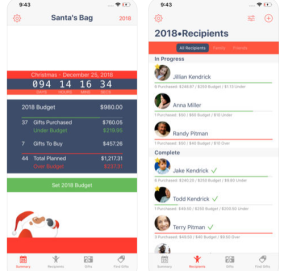 This Apple-exclusive app is set to revolutionize your Christmas shopping experience from creating your gift list, gift planning, budgeting, managing gift receipts to gift ideas from your favorite merchants, and more.
When it comes managing your budget, the app shows you the number of days before Christmas, how much you’ve already spent, how much you have left and the total amount that you still need to spend for the pending gifts that needs to be bought. The app will also give you an alert that says if you are “under or over budget,” which is a very helpful feature to easily keep track of your holiday budget.
Christmas List
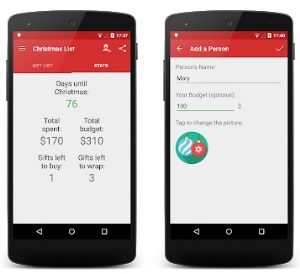 Don’t worry Android users, I also got you covered. Just like Santa’s Bag, Christmas Gift List is a free app for creating gift lists and setting a gift budget for each person on your list. Aside from providing a certain amount per person and per gift, it also has a feature that lets you see useful stats such as money spent so far and your total budget. And in the app, you can mark the gifts as purchased as you buy them and even mark them as wrapped as you get around to wrapping them. As for gift ideas and shopping, it comes with an auto-generated Amazon suggestions tab that will allow you to do all your shopping within the app while keeping an eye on your expenditures.
ShopSavvy(iOS, Android)
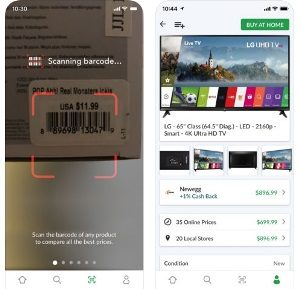
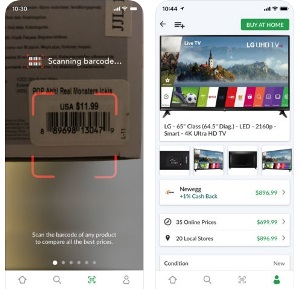
Now when it comes to scoring the lowest price or the best deal for your holiday shopping, ShopSavvy is a brilliant app to assist you with that. The app comes with a barcode scanner that you can use while you’re shopping to easily compare prices for ultimate savings. You can also search through hundreds of product categories and discover deals from both online and in-store retailers, including Best Buy, Amazon, Target, Newegg and Walmart to name a few.
Dosh (iOS, Android)
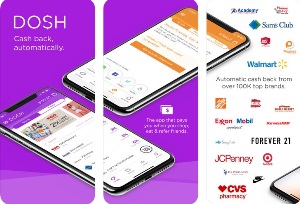
 To earn rewards from all your holiday shopping, Dosh is a cash-back app that automatically finds existing offers, redeems them and puts the cash into your Dosh Wallet. Unlike other cash-back programs though, Dosh will give you cash and not just gift cards or coupons. Aside from getting rewarded for physical purchases, you can also get up to 10% cash back on dining out and pumping gas at thousands of merchants and brands nationwide – perfect for your holiday travels.
The apps listed in this blog post are really worth trying if you want to maximize savings during this very expensive time of the year. Make sure to download all of them to avoid overspending this holiday season.
Happy holidays!
 We are currently living in a world that is dominated by technology. It seems like smart devices are springing up like mushrooms after the rain, and have made their way to every aspect of our lives.
 A motion sensor light switch is definitely a convenient way to save time and energy. With its advanced sensing technology, the lights are automatically turned on when it detects motion, and are turned off when the motion is not detected anymore. Now, you don’t have to worry about lights left opened in rooms and hallways that waste a lot of energy and money.
 $20-Honeywell 1 week programmable thermostat to a $200-Nest learning thermostat that you can control remotely through Wi-fi. Either way, this product can save you up to 10% on cooling and heating costs.
 Food waste is a worldwide epidemic which is not just causing a toll to our environment but our pockets too. To save money and reduce waste, make sure to keep your fruits and veggies fresh for longer by storing them properly and using freshness extenders. This one from BluApple promises to save you hundreds of dollars every year. It will slow down the rate of spoilage by absorbing ethylene gas, which signals produce to ripen.
 For regular groomers, self-cleaning electric shavers are a must-buy. It may cost you a couple hundred dollars upfront but think about the money you save from disposable razors and shaving creams. Not only that, you will be able to clean your hair with foam and gel through a unique dual-filtration system, lubricate the shaver for the perfect shaving, and automatically charge after use – all in a single press of a button.
 Also known as a crockpot, this kitchen gadget should be a staple in every household. With a slow cooker, you can easily whip up soups and stews from your leftover meats and vegetables. Plus, it saves you so much cooking time because all you have to do is toss the ingredients inside your crockpot and let it cook there while you do your other chores.
 Sorry, but it’s not the time for multiple outfit changes because you need to minimize your luggage to avoid baggage fees. Also, you can save bucks if you opt to travel with only a hand carry (if that’s even possible to pack everything in one small bag). If you want to bring gifts for friends and family, it’s better to ship them ahead of time or have online orders shipped to the location where you will be spending the holidays.
 If the price is still too much for you, then choose a destination that’s accessible by car. It may be a loooong car ride but if you’re traveling with other people, just take turns driving. For a hassle-free road trip, make sure to
  But when all else fails, just go on a staycation. At the end of the day, it’s not really about the destination but how you make the most of that dedicated time for your family, friends or yourself.
  When it comes to formulating a budget, a line-item budgeting model is what we often see, where one focuses on the expenses rather than the savings.